Scuds: The Unsung Heroes Beneath the Surface
What a duck hunt at Choke Canyon taught me about building a better pond ecosystem.
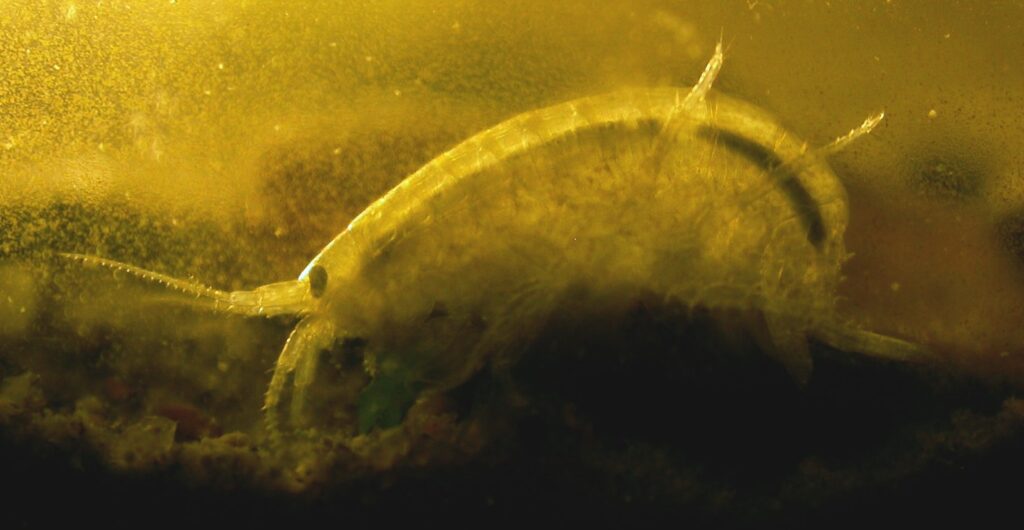
My trip down the scud rabbit hole started while duck hunting at Choke Canyon, Texas. Walking through the hydrilla, I noticed these tiny crustaceans everywhere. When I came out of the water, they were so abundant they would form rings around my wader legs. The ducks were working those areas, where scuds, ramshorn snails, and bladder snails were plentiful.
It looked like an all-you-can-eat shrimp buffet for ducks.
That experience made me look at the water differently. We spend plenty of time thinking about the fish we want to catch and the birds we want to attract. How often do we stop to consider the little creatures helping feed them?
Meet the scud
Scuds are small crustaceans called amphipods. You may hear them called sideswimmers or freshwater shrimp, although they are not true shrimp. Their curved bodies, antennae, and many legs make them fascinating little animals to watch. Many live among vegetation and decaying material, finding food and shelter while becoming food themselves. Missouri Department of Conservation: scuds.


Turning yesterday’s plants into tomorrow’s food
Many scuds feed on decomposing organic material, algae, and the thin communities of organisms growing on underwater surfaces. They help process material in the pond and, in turn, become prey for other animals. Think of them as both recyclers and groceries within the aquatic food web.
A productive pond has more going on than the fish you can see from the bank.
The food chain beneath your next catch
Stocking the fish you want to catch is only part of the picture. Those fish need a food base. Bluegill and other small fish eat aquatic invertebrates, and small fish can then feed larger predators. Scuds can contribute to that chain where habitat, prey size, and feeding habits line up. Texas Parks and Wildlife: bluegill.
That does not make scuds a universal first food for every fish fry. Newly hatched fish often need much smaller food, including zooplankton. The goal is a varied food web that supports different animals at different stages of life—not a pond built around one organism.


A duck buffet—with different diners
The duck activity at Choke Canyon helped spark my curiosity, but different ducks eat different menus. Amphipods can be important food for scaup, while dabbling ducks vary in their use of seeds, vegetation, snails, insects, and other foods. A pond rich in scuds is not a guarantee that every kind of duck will show up. It is one piece of the habitat picture. NRCS: Wetland Management for Waterfowl.


Tiny animals that help scientists ask big questions
Scuds also have a place in environmental science. Researchers use Hyalella azteca in sediment-toxicity testing, measuring effects such as survival and growth. That makes them useful study animals when investigating contamination. USGS research on sediment toxicity testing.
Finding scuds does not, by itself, prove that water is clean. Not finding them does not diagnose pollution, either. Habitat, predators, temperature, oxygen, and other conditions matter. They help scientists ask questions; they are not a substitute for a proper water-quality assessment.
Native vegetation can help keep the buffet stocked
My hydrilla observation at Choke Canyon is not a recommendation to plant it. For native habitat, coontail—also called hornwort (Ceratophyllum demersum)—deserves a closer look. It is native to Texas and widely across North America and grows in ponds, lakes, and slow-moving water. Its branching underwater growth provides habitat for small aquatic animals. Native range is more useful here than a garden hardiness-zone number. Texas A&M AquaPlant: coontail.
In a Wisconsin study comparing three aquatic plants, Hyalella azteca was most abundant on coontail. That is encouraging evidence of its value as habitat, not a promise that every pond will produce the same results. USGS: aquatic plants and invertebrate communities.
Goliad Farms also describes using hornwort in its scud cultures as cover and a place for grazing. Its observations include scuds eating the plant when crowded or short of food. Goliad Farms culture notes.
Native does not mean maintenance-free. Coontail can form dense growth, and Mississippi State Extension generally advises against introducing it into small recreational ponds. Existing, balanced patches can be useful; get local pond-management advice before trying to establish more. Mississippi State Extension: coontail management.
Build the habitat that keeps the buffet stocked
Before asking how many scuds to add, ask whether your pond offers conditions in which small aquatic life can survive and reproduce.
- Provide shelter without losing the pond. Appropriate native vegetation can create habitat while leaving room for fishing, access, and open water.
- Watch what washes in. Vegetated buffers can help limit erosion and runoff carrying fertilizers or pesticides.
- Keep oxygen in mind. Adding piles of leaves, manure, or excess feed is not a shortcut to a healthy food web. Decomposing material consumes oxygen, and plants do not photosynthesize at night.
- Get local advice before stocking. Match organisms and plants to the watershed and the pond’s actual conditions.
Texas Parks and Wildlife’s aquatic-science resources explain how pond communities and water conditions fit together.
Look closer next time
Those rings around my waders changed what I noticed. I still look for ducks and fish, but I also look at what is happening below them in the food chain.
If you manage a pond, give that small life a place in your plans. The next great day on the water may begin with something barely big enough to see.